Baking Station Setup

Baking Station Setup: Complete Guide to Organizing Your Home Baking Space

Baking Station Setup: Complete Guide to Organizing Your Home Baking Space

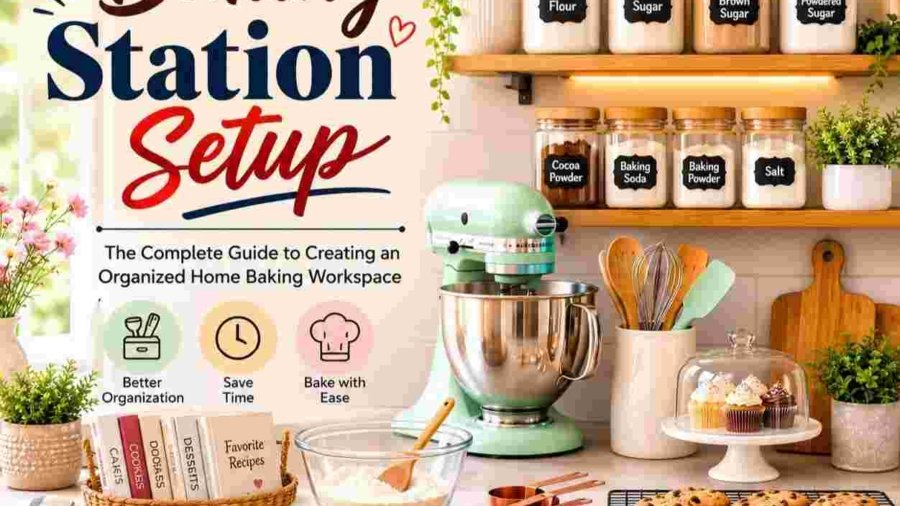
A well-planned baking station setup can completely transform your kitchen experience. Instead of digging through crowded cabinets for measuring cups or searching multiple drawers for a whisk, everything you need stays in one organized workspace. Whether you bake once a month or every weekend, having a dedicated baking area saves time, reduces frustration, and makes every recipe easier to follow.
Recent kitchen organization trends also support this approach. Designers are increasingly recommending dedicated prep zones and even appliance garages to keep frequently used tools accessible while reducing countertop clutter. Organizing baking supplies into functional stations is becoming one of the most practical kitchen upgrades for modern homes. 
This guide covers everything you need to know—from choosing the best location to organizing ingredients, selecting essential tools, maximizing storage, and maintaining your workspace for years to come.

What Is a Baking Station?

A baking station is a dedicated workspace designed specifically for baking activities. Instead of spreading ingredients and equipment across the kitchen, everything is grouped into one organized area. Professional organizers generally recommend creating functional zones within the kitchen because they reduce unnecessary movement and make meal preparation more efficient. This same principle applies perfectly to baking, where multiple ingredients, measuring tools, and specialty equipment are used in quick succession.

Baking station setup

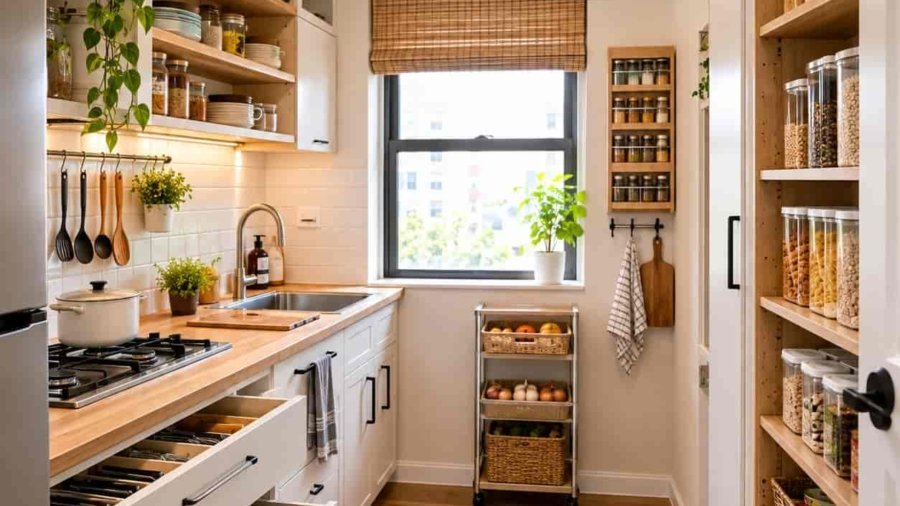
An effective home baking station doesn’t require a large kitchen. Many successful setups fit inside a single cabinet, a section of countertop, or even a rolling utility cart. The key is thoughtful organization rather than square footage. Keeping flour, sugar, measuring tools, mixing bowls, and baking pans within arm’s reach minimizes interruptions and helps maintain focus while following recipes.

Table of Contents

Benefits of a Dedicated Baking Station

Save Time and Reduce Kitchen Stress

The biggest advantage of an organized baking workspace is efficiency. Every minute spent searching for ingredients interrupts your workflow and increases the chances of mistakes. Kitchen storage experts recommend grouping items by task so commonly used tools remain together. This simple organizational strategy reduces clutter while speeding up preparation. 
Imagine preparing chocolate chip cookies. Instead of opening five different cabinets, you simply turn to one station where flour, baking soda, measuring cups, mixing bowls, and baking sheets are already organized. The process becomes smoother and much more enjoyable.
Another benefit is easier cleanup. Since baking supplies remain confined to one area, spills and messes are easier to manage. A clean workspace also improves food safety by reducing cross-contamination between baking ingredients and everyday cooking items.

Improve Baking Accuracy

Baking depends heavily on precise measurements. Having digital scales, measuring spoons, thermometers, and mixing bowls organized together helps maintain consistency. When tools are easily accessible, you’re less likely to substitute incorrect measurements or skip important steps.
Professional bakers rely on organized workstations because accuracy directly affects results. While home kitchens differ from commercial bakeries, the same principle applies. Organization promotes consistency, and consistency produces better baked goods. 

Did You Know?

Many professional kitchens organize equipment using the “mise en place” method, meaning “everything in its place.” Home bakers can apply this same strategy for faster, cleaner baking sessions. 

Who Needs a Home Baking Station?

A dedicated baking station setup isn’t just for passionate bakers. Almost anyone who enjoys homemade treats can benefit from an organized baking area.
Families often bake together during weekends and holidays. Having one central location keeps everyone involved while preventing unnecessary confusion. Children can easily locate measuring cups or cookie cutters, making baking safer and more enjoyable.
Apartment dwellers can also create highly functional stations despite limited space. A compact countertop baking station, a utility cart, or a pantry shelf can store everything needed without overwhelming a small kitchen. Creative storage solutions like stackable bins, magnetic racks, and vertical pan organizers maximize every inch.
Beginners especially benefit because organization removes much of the intimidation associated with baking. When ingredients and equipment are always in predictable locations, following recipes becomes much easier. Instead of worrying about finding supplies, new bakers can focus on learning techniques and enjoying the process.
Experienced bakers appreciate dedicated workstations because they improve efficiency during larger baking projects like birthday cakes, holiday cookies, or bread making.

Home Baking Station

Planning Your Baking Workspace

Quick Answer: Before buying containers or organizing tools, evaluate your available kitchen space and create a workflow that lets you move naturally from measuring ingredients to mixing, baking, and cooling.

A successful baking station setup starts with thoughtful planning. Many home bakers rush into buying storage bins or fancy organizers before considering how they actually bake. The result is often a beautiful-looking station that doesn’t function efficiently. Professional organizers generally recommend observing your kitchen habits for a few days before making any changes. Notice where you naturally reach for flour, where you mix ingredients, and where baked goods cool. These patterns help you design a workspace that supports your routine instead of forcing you to adapt to it.

Another important factor is proximity. Ideally, your baking station should be located near your oven and have enough countertop space for mixing bowls, measuring ingredients, and rolling dough. If possible, position your stand mixer close to an electrical outlet to avoid moving heavy appliances every time you bake. Keep ingredients within arm’s reach but separate from heat sources to preserve freshness. If your kitchen is small, even dedicating one cabinet and a two-foot section of countertop can create a highly functional baking zone.
Think about your baking frequency as well. Someone who bakes weekly may want a permanent countertop setup with frequently used appliances readily available. Occasional bakers, on the other hand, may prefer storing equipment inside cabinets while maintaining an organized system for quick access. The goal is to minimize unnecessary movement, reduce clutter, and make baking feel effortless.

Baking Workspace

Measuring Available Space

Before organizing your supplies, measure every available storage area. Record the height, width, and depth of cabinets, drawers, pantry shelves, and countertop sections. These measurements help ensure that storage containers, shelf risers, and organizers fit properly.
Don’t overlook vertical space. Empty wall areas can hold pegboards, floating shelves, magnetic knife strips for offset spatulas, or hanging rails for measuring cups and utensils. Cabinet doors can also store measuring spoons, recipe cards, or silicone baking mats using adhesive hooks.

Quick Win 

Take photos of your kitchen before organizing. Comparing the “before” and “after” layouts helps identify what worked best and reveals additional improvements over time.

Creating an Efficient Workflow

Professional bakers often arrange their workspaces according to the sequence of baking tasks. You can apply the same strategy at home.
A practical workflow usually follows this order:
  1. Ingredient storage
  2. Measuring area
  3. Mixing station
  4. Preparation surface
  5. Oven access
  6. Cooling area
  7. Storage for finished baked goods
Following this sequence minimizes unnecessary walking and keeps your baking process organized. Keeping similar items together also reduces decision fatigue. For example, store all measuring tools in one drawer instead of scattering them throughout the kitchen.

Baking Station

Buy According to Your Baking Style

Ask yourself:
• Do you bake every weekend?
• Do you mainly bake cookies?
• Do you enjoy bread making?
• Do you decorate cakes?
• Do you bake with children?
Your answers determine which tools deserve priority.
For example:

Baking StyleRecommended Equipment
Cookie BakingCookie scoop, baking sheets, cooling racks
Bread BakingDigital scale, Dutch oven, dough scraper
Cake BakingCake pans, offset spatula, turntable
CupcakesMuffin pans, piping bags, decorating tips
Family BakingLarge mixing bowls, stand mixer, storage containers

Choosing the Best Location

Quick Answer: The best location for a baking station is close to your oven, has adequate countertop space, good lighting, nearby electrical outlets, and easy access to your baking ingredients.

Choosing the right location is one of the most important decisions you’ll make when designing your home baking station. A poorly positioned workspace creates unnecessary movement and frustration, while a thoughtfully located station improves efficiency every time you bake.

Natural lighting is often overlooked but incredibly valuable. Measuring flour or decorating cookies becomes much easier in a well-lit area. If natural light isn’t available, consider installing under-cabinet LED lighting to illuminate your workspace.
Ventilation also matters. Avoid storing flour, chocolate, or other sensitive ingredients directly beside ovens, dishwashers, or sunny windows where temperatures fluctuate. Consistent temperatures help preserve ingredient quality and extend shelf life.
Accessibility is another key factor. Frequently used tools like mixing bowls, measuring cups, silicone spatulas, and cooling racks should be easily reachable without climbing stools or moving heavy equipment.

baking station setup

Countertop vs Cabinet Setup

Many homeowners wonder whether a countertop or cabinet-based baking station setup is better. The answer depends on available space, baking frequency, and kitchen layout.

FeatureCountertop Baking StationCabinet Baking Station
AccessibilityExcellentVery Good
AppearanceAlways visibleHidden when closed
Best ForFrequent bakersSmall kitchens
Space RequiredModerateMinimal
Appliance StorageConvenientProtected from dust
MaintenanceRequires frequent cleaningEasier to keep tidy

A countertop baking station works especially well for people who bake multiple times each week. Stand mixers, ingredient canisters, and frequently used utensils remain readily available, reducing preparation time. Decorative storage containers can even enhance your kitchen’s appearance.
Cabinet-based stations are ideal for smaller homes or minimalist kitchens. Roll-out shelves, drawer organizers, and pull-out work surfaces allow you to enjoy the benefits of an organized baking station without sacrificing valuable countertop space.

Pros of a Countertop Baking Station

• Faster preparation
• Easy access to appliances
• Attractive kitchen display
•Encourages frequent baking

Pros of a Cabinet Baking Station

• Cleaner appearance
• Better dust protection
• Ideal for apartments
• Saves countertop space

Baking tools

Pantry Baking Stations

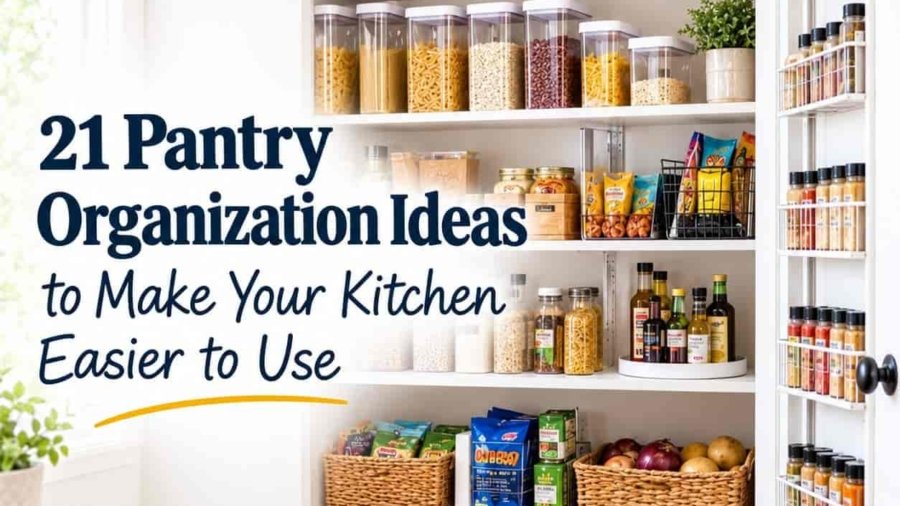
If you have a walk-in pantry or a large pantry cabinet, dedicating part of it to baking can be an excellent solution. Store dry ingredients together using airtight containers with clearly printed labels. Arrange frequently used ingredients at eye level while placing seasonal baking items higher up.

Clear containers allow you to monitor ingredient levels instantly, making grocery shopping easier. Shelf risers maximize vertical storage, while baskets group related items such as cake decorating supplies or cookie cutters.
Kitchen storage experts also recommend using turntables for extracts, food coloring, and small bottles. Rotating organizers prevent items from getting lost behind larger containers.

Must-Have Baking Tools

Quick Answer: Every baking station should include accurate measuring tools, mixing bowls, quality bakeware, cooling racks, spatulas, and at least one dependable mixer.

Building your collection doesn’t require purchasing every gadget available. Instead, focus on versatile, durable tools that you’ll use repeatedly. Many home bakers prefer buying fewer high-quality items rather than replacing inexpensive tools every year.

The most essential baking tools include measuring cups, measuring spoons, a digital kitchen scale, stainless steel mixing bowls, silicone spatulas, wire whisks, rolling pins, cooling racks, baking sheets, cake pans, loaf pans, muffin tins, pastry brushes, dough scrapers, and parchment paper.

Essential Baking Tools Comparison

ToolWhy You Need ItBest For
Digital Kitchen ScaleAccurate measurementsBread, cakes, cookies
Stand MixerHands-free mixingFrequent bakers
Hand MixerCompact and affordableBeginners
Silicone SpatulaMixing and scrapingEvery recipe
Cooling RackEven coolingCookies and cakes
Measuring CupsDry ingredientsEveryday baking
Measuring SpoonsSmall ingredient accuracyAll recipes
Mixing BowlsIngredient preparationEvery baker

Must-Have Baking Ingredients

Quick Answer: Keep your most frequently used baking ingredients together in airtight containers, label everything clearly, and rotate stock regularly to maintain freshness and avoid waste.

A well-organized baking station setup is only as effective as the ingredients it stores. Even the best collection of baking tools won’t help if you’re constantly searching for flour or discovering that your baking powder expired months ago. Organizing ingredients by frequency of use creates a smoother workflow and helps ensure every recipe starts with fresh, high-quality supplies.

The foundation of every home baking station should include essential dry ingredients such as all-purpose flour, bread flour, cake flour, granulated sugar, brown sugar, powdered sugar, baking powder, baking soda, salt, cocoa powder, vanilla extract, cornstarch, and common spices like cinnamon and nutmeg. These ingredients are used repeatedly in cookies, cakes, muffins, breads, and pastries, making them ideal candidates for permanent storage within your baking station.

Professional organizers generally recommend transferring dry ingredients from their original packaging into airtight, food-safe containers. Clear containers make it easy to monitor inventory at a glance, while stackable designs maximize cabinet and pantry space. Label each container with the ingredient name and purchase date. This simple habit prevents confusion between similar-looking ingredients such as powdered sugar and flour while helping you rotate older products first. Fresh baking ingredients produce better texture, flavor, and rising performance, making organization beneficial for both convenience and baking quality.

Baking Ingredients

Essential Baking Pantry Checklist

IngredientPurposeStorage Tip
All-Purpose FlourEveryday bakingAirtight container
Bread FlourYeast breadsCool, dry place
Cake FlourSoft cakesLabel clearly
Granulated SugarGeneral sweeteningMoisture-proof container
Brown SugarCookies and barsAirtight with moisture saver
Powdered SugarFrostingKeep sealed
Baking PowderLeaveningReplace every 6–12 months
Baking SodaLeaveningStore away from moisture
Cocoa PowderChocolate dessertsDark cabinet
Vanilla ExtractFlavoringRoom temperature

Pro Tip

Group ingredients according to how you use them. Keep leavening agents together, flavorings together, and decorating supplies in separate bins. This system reduces searching and speeds up recipe preparation.

Smart Baking Supplies Organization

Quick Answer: Organize baking supplies by category rather than size. Store similar items together so every tool has a dedicated home and can be found within seconds.

Good baking supplies organization isn’t about buying dozens of storage products. It’s about creating logical systems that make sense every time you bake. Kitchen storage experts suggest grouping tools according to how they’re used instead of where they happen to fit. For example, keep measuring cups and spoons together because they’re almost always used during the same stage of baking. Mixing bowls should stay near mixers, while decorating supplies deserve their own dedicated container or drawer.

One of the biggest mistakes beginners make is scattering baking tools throughout the kitchen. Cookie cutters end up in one drawer, piping bags in another, and cooling racks somewhere else entirely. Every baking session begins with a treasure hunt. Consolidating these items into one dedicated baking zone dramatically improves efficiency.
Transparent storage bins are especially useful because they let you see what’s inside without opening every container. Consider dividing supplies into categories such as measuring tools, mixing equipment, decorating supplies, cookie cutters, parchment paper, silicone mats, and specialty pans. Label each container clearly so every family member can return items to the correct location.

Did You Know?
Studies on home organization consistently show that clearly labeled storage systems reduce the time spent searching for household items. Even saving a few minutes each baking session adds up significantly over the course of a year.

Baking Supplies Organization

Drawer Organization

Quick Answer: Use adjustable drawer dividers to separate measuring tools, utensils, decorating supplies, and small accessories for quick, clutter-free access.

Drawers often become catch-all storage areas, making it difficult to locate even the simplest baking tool. Transforming one drawer into a dedicated baking organizer creates one of the most noticeable improvements in your baking workspace.

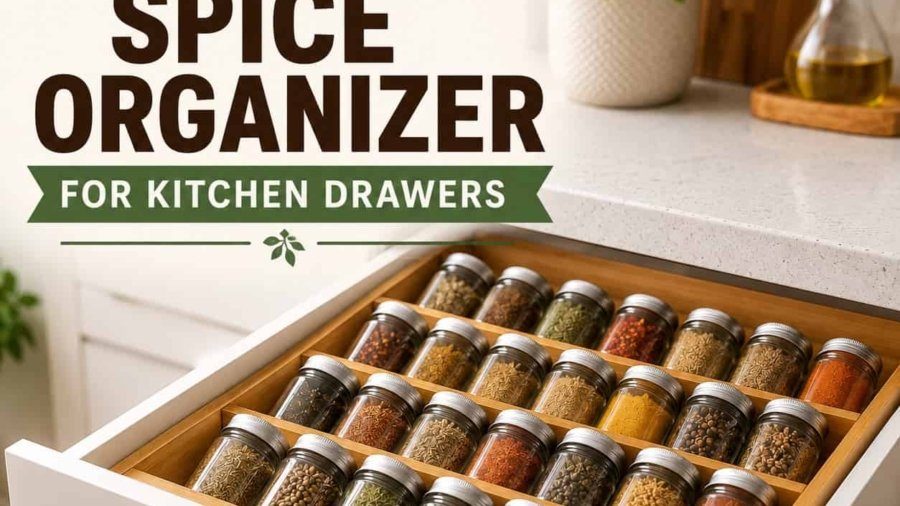
Start by removing everything from the drawer and sorting similar items together. Measure the drawer before purchasing dividers or inserts. Adjustable dividers provide flexibility as your baking collection grows. Reserve one section for measuring cups and spoons, another for spatulas and whisks, and another for specialty tools like dough scrapers, pastry brushes, and cookie scoops.

Keep frequently used tools closest to the front of the drawer while seasonal or specialty items remain toward the back. Avoid stacking utensils on top of one another because this creates unnecessary clutter and slows down your workflow. Silicone liners also prevent tools from sliding around every time the drawer opens.

Drawer Organization Checklist

• Measuring cups
• Measuring spoons
• Silicone spatulas
• Wire whisks
• Dough scraper
• Pastry brush
• Cookie scoop
• Bench scraper
• Offset spatula
• Decorating tips

Drawer Organization

Quick Answer: Maximize unused wall and cabinet space by storing baking tools vertically instead of horizontally.

Vertical storage is one of the most effective solutions for small kitchen baking stations. Many kitchens have unused wall space that can easily accommodate pegboards, floating shelves, magnetic racks, or hanging rails. These additions free valuable drawer and cabinet space while keeping frequently used tools within easy reach.
Cooling racks, baking sheets, cutting boards, and muffin tins should be stored vertically whenever possible. Vertical dividers eliminate the frustration of lifting several heavy pans just to reach the one you need. Door-mounted organizers provide another excellent storage solution for measuring spoons, oven mitts, parchment paper, and silicone baking mats.
Wall-mounted hooks can also hold mixing bowls, rolling pins, and reusable shopping bags for farmers’ market ingredients. When installed thoughtfully, vertical storage keeps countertops clean while adding visual appeal to your baking station.

Vertical Storage Ideas

Storage Container Comparison

Container TypeBest ForProsCons
Glass ContainersFlour and sugarDurable, attractiveHeavy
Plastic BPA-FreeEveryday ingredientsLightweightCan stain
Stainless SteelDry goodsLong-lastingNot transparent
Stackable AcrylicPantry organizationSpace-savingHigher cost

Measuring Tools Comparison

ToolAccuracyBest Use
Measuring CupsGoodDry ingredients
Measuring SpoonsExcellentSmall quantities
Digital Kitchen ScaleOutstandingBread and pastries
Liquid Measuring CupExcellentLiquids

Quick Win

Choose storage containers with uniform sizes and matching labels. Consistent containers stack better, make shelves look cleaner, and simplify ingredient management.

Small Kitchen Baking Station Ideas

Quick Answer: A small kitchen can still have a highly functional baking station setup by using vertical storage, multi-purpose furniture, compact appliances, and organized cabinets.

Limited square footage doesn’t mean you have to give up on having a dedicated baking area. Many home bakers work in kitchens with less than 100 square feet and still enjoy efficient, organized workspaces. The key is making every inch count. Instead of spreading baking supplies throughout multiple cabinets, create one compact baking zone where everything is easy to reach. This approach reduces clutter, improves workflow, and makes baking feel far more enjoyable.

Space-Saving Ideas

• Install floating shelves above countertops.
• Use cabinet door organizers.
• Store baking sheets vertically.
• Choose nesting bowls and measuring cups.
• Add a rolling kitchen cart for extra storage.
• Use stackable airtight containers.
• Install under-shelf baskets.
• Hang utensils on wall rails.

Quick Win

If you have only one available cabinet, dedicate the entire cabinet to baking. Keeping every baking item together saves far more time than spreading supplies across multiple locations.

Small Kitchen Baking Station Ideas

Cleaning Tips for Your Baking Station

Quick Answer: Clean after every baking session, wipe containers regularly, sanitize high-touch surfaces, and inspect ingredients monthly.

Keeping your baking station setup clean protects food quality and extends the life of your equipment. Flour dust can quickly accumulate inside drawers and around appliances, attracting moisture and pests if ignored. Wipe countertops immediately after baking using a food-safe cleaner, paying special attention to corners where dry ingredients often collect.

Storage containers should be emptied and washed periodically before refilling. This prevents residue buildup and reduces the chance of contaminating fresh ingredients with stale flour or sugar. Silicone mats and baking tools should also be cleaned thoroughly according to the manufacturer’s recommendations.

Appliances deserve regular attention as well. Stand mixers, food processors, and digital scales perform better when kept free of flour dust and sticky spills. A soft microfiber cloth works well for cleaning electronic equipment without causing damage

Cleaning Checklist

• Wipe countertops daily.

• Vacuum cabinet crumbs monthly.

• Wash storage containers before refilling.

• Sanitize drawer organizers.

• Clean appliance exteriors weekly.

• Replace worn labels.

• Check ingredient freshness monthly.

Cleaning Tips for Your Baking Station

Common Baking Station Mistakes to Avoid

Quick Answer: Avoid buying unnecessary gadgets, overfilling storage areas, ignoring workflow, and failing to label ingredients.

Even well-designed baking stations can become cluttered if organization habits aren’t maintained. One of the biggest mistakes is purchasing every baking gadget available instead of focusing on versatile tools. Specialty equipment often occupies valuable storage space while being used only once or twice each year. 

Another common problem is overcrowding cabinets. Every shelf should have enough empty space to remove containers easily. When storage becomes packed too tightly, supplies become difficult to access, increasing frustration and discouraging organization.

Common Mistakes

• Buying unnecessary gadgets

• Ignoring expiration dates

• Storing ingredients near heat

• Overcrowding shelves

• Forgetting labels

• Mixing cooking and baking supplies

• Leaving appliances difficult to access

Frequently Asked Questions (FAQs)

What should every baking station include?

Every baking station should include measuring tools, mixing bowls, baking pans, cooling racks, airtight ingredient containers, and commonly used baking ingredients.

Should baking ingredients be stored in airtight containers?

Yes. Airtight containers help maintain freshness, protect against moisture and pests, and make ingredients easier to identify and access.

What are the most important baking tools for beginners?

A digital kitchen scale, measuring cups and spoons, mixing bowls, silicone spatulas, baking sheets, cooling racks, and a reliable hand or stand mixer.

What's the best way to store baking sheets?

Store baking sheets vertically using a rack or divider so each pan can be removed easily without stacking.

What is the biggest mistake people make when organizing a baking station?

The most common mistake is buying too many specialty tools before creating an efficient organization system based on actual baking habits.

Best kitchen Tools under 90$

Best Kitchen Tools Under $90: 15 Affordable Upgrades

Best Kitchen Tools Under $90: 15 Affordable Upgrades

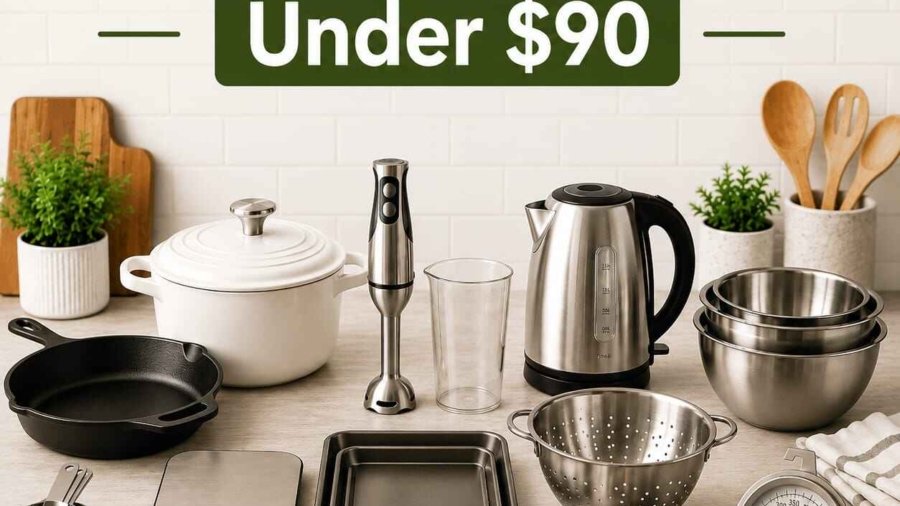
A well-equipped kitchen doesn’t have to drain your wallet. While premium cookware and high-end appliances can cost hundreds of dollars, many everyday kitchen tools deliver excellent performance for less than $90. The right equipment helps you cook more efficiently, reduces preparation time, and improves the quality of your meals without requiring professional culinary skills.

Whether you’re preparing quick weekday dinners, baking for family gatherings, or experimenting with new recipes, investing in practical kitchen tools makes every task more enjoyable. Instead of purchasing trendy gadgets that collect dust, it’s smarter to choose versatile tools that you’ll reach for almost every day. These affordable upgrades can transform your cooking experience by improving accuracy, saving time, and making cleanup easier.

This guide highlights 15 of the best kitchen tools under $90 that offer exceptional value. Each item has been selected for its durability, versatility, and usefulness in a modern home kitchen.

Why Buy Kitchen Tools Under $90?

Finding quality kitchen equipment at an affordable price is easier than ever. Many trusted manufacturers now offer durable cookware and accessories that rival premium brands at a fraction of the cost.

Affordable tools also allow you to build your kitchen gradually instead of making one large investment. Rather than spending hundreds on a single appliance, you can purchase several practical tools that improve multiple aspects of cooking. 

From meal preparation to baking and food storage, every item on this list delivers long-term value without exceeding your budget

Best Kitchen Tools Under $90

Table of Contents

Best Kitchen Tools Under $90 at a Glance

  • #1 Cast Iron Skillet
  • #2 Dutch Oven
  • #3 Immersion Blender
  • #4 Electric Kettle
  • #5 Mixing Bowl Set
  • #6 Silicone Utensil Set
  • #7 Mandoline Slicer
  • #8 Meat Thermometer
  • #9 Kitchen Shears
  • #10 Salad Spinner
  • #11 Spice Grinder
  • #12 Baking Sheet Set
  • #13 Colander
  • #14 Garlic Press
  • #15 Oven Thermometer
Popular

Cast Iron Skillet

A cast iron skillet remains one of the most versatile pieces of cookware you can own. It performs exceptionally well on stovetops, in ovens, on grills, and even over campfires. Unlike many non-stick pans, cast iron becomes naturally non-stick when seasoned properly, making it ideal for cooking eggs, vegetables, steaks, and cornbread.
Another major advantage is heat retention. Once heated, cast iron maintains consistent temperatures, helping foods develop beautiful caramelization and restaurant-quality sears. It also transitions effortlessly from stovetop to oven, allowing you to finish dishes without transferring them to another pan.

Cast Iron Skillet

Dutch Oven

A Dutch oven is an investment that pays for itself through years of reliable cooking. It’s perfect for soups, stews, pasta sauces, bread baking, chili, and slow-cooked meats. Heavy construction distributes heat evenly, reducing hot spots and preventing scorching.
Many affordable Dutch ovens under $90 offer enamel-coated interiors, eliminating the need for seasoning while making cleanup much easier. Their versatility means one pot can replace several specialized cooking vessels, saving both money and cabinet space.

Immersion Blender

An immersion blender simplifies food preparation by blending ingredients directly inside pots, bowls, or containers. Instead of transferring hot soup into a traditional blender, you simply immerse the blending shaft and puree everything in seconds.

These compact appliances also work well for smoothies, sauces, baby food, whipped cream, salad dressings, and homemade mayonnaise. Their small footprint makes storage easy, while detachable shafts simplify cleaning after use.

Immersion Blender

Electric Kettle

An electric kettle boils water significantly faster than a stovetop kettle or microwave. It’s ideal for coffee, tea, oatmeal, instant noodles, French press brewing, and cooking preparation.
Many models include automatic shut-off, boil-dry protection, and temperature settings for different beverages. These safety features, combined with rapid heating, make an electric kettle one of the most practical appliances available under $90.

Electric Kettle

Mixing Bowl Set

Every kitchen benefits from a durable set of nesting mixing bowls. Stainless steel bowls are lightweight, resistant to stains, and suitable for mixing dough, tossing salads, marinating meats, and whisking batters. Nesting designs save storage space, while non-slip bases improve stability during vigorous mixing. Many sets also include lids, allowing leftovers or prepared ingredients to be stored directly in the same bowl.

Mixing Bowl Set

Silicone Cooking Utensil Set

Silicone utensils protect cookware while handling high temperatures with ease. Unlike metal utensils, they won’t scratch ceramic or non-stick surfaces, helping your cookware last longer.

A quality set typically includes spatulas, spoons, tongs, ladles, serving spoons, and turners. Heat-resistant silicone also resists staining and odors, making these utensils practical for everyday cooking.

Silicone Cooking Utensil Set

Mandoline Slicer

Preparing vegetables by hand often produces uneven slices that cook inconsistently. A mandoline slicer solves this problem by creating perfectly uniform slices within seconds.
Whether you’re slicing cucumbers, potatoes, onions, zucchini, or cabbage, consistent thickness improves both presentation and cooking results. Adjustable blade settings also let you choose different cutting styles for salads, gratins, and homemade chips.

Mandoline Slicer

Instant-Read Meat Thermometer

Guessing when meat is fully cooked often leads to overcooked chicken or undercooked beef. An instant-read meat thermometer removes uncertainty by providing accurate temperature readings within seconds.
It’s useful for grilling, roasting, smoking, baking bread, and even making candy. Accurate cooking temperatures improve food safety while preserving flavor and moisture.

Instant-Read Meat Thermometer

Kitchen Shears

Kitchen shears do much more than cut packaging. They’re excellent for trimming herbs, spatchcocking poultry, cutting pizza, opening food packages, slicing bacon, and trimming vegetables.

Many models include bottle openers, nutcrackers, and built-in herb strippers, making them one of the most multifunctional tools in any kitchen.

Kitchen Shears

Spice Grinder

Freshly ground spices deliver a level of aroma and flavor that pre-ground seasonings simply can’t match. A compact spice grinder allows you to grind peppercorns, cumin, coriander, cloves, dried chilies, and many other whole spices in seconds. The essential oils released during grinding create richer flavors that can elevate everything from soups and curries to roasted vegetables and grilled meats.

Many spice grinders under $90 feature stainless steel blades, transparent lids, and one-touch operation for quick, consistent results. Some models can also grind coffee beans, making them a versatile addition to your kitchen. 

If you enjoy experimenting with international cuisines, a spice grinder gives you the flexibility to customize seasoning blends while reducing the need to buy multiple pre-made spice mixes.


Spice Grinder

Why You’ll Love It
• Preserves maximum flavor and aroma
• Creates custom spice blends
• Works quickly with minimal effort
• Easy to clean and compact to store

Baking Sheet Set

A reliable baking sheet set is one of the most frequently used tools in any kitchen. Beyond baking cookies, these versatile pans are ideal for roasting vegetables, cooking sheet-pan dinners, toasting nuts, reheating leftovers, and even preparing homemade pizza. 

Investing in a quality set means better heat distribution, fewer warped pans, and more consistent cooking results.
Look for heavy-gauge aluminum or aluminized steel baking sheets with reinforced rims. These materials resist warping under high temperatures and promote even browning. Non-stick coatings are convenient, but many home cooks prefer uncoated pans paired with parchment paper or silicone baking mats for greater durability. 

A set with multiple sizes also provides flexibility for different recipes, whether you’re baking a small batch of cookies or roasting a full tray of vegetables for family dinner.

Baking Sheet Set

Stainless Steel Colander

Although simple, a sturdy colander is one of the hardest-working tools in the kitchen. It helps drain pasta, rinse fruits and vegetables, wash rice, strain beans, and prepare fresh produce with ease. Stainless steel models offer greater durability than plastic alternatives and resist staining, odors, and cracking over time.
A good colander should feature sturdy handles, stable feet, and evenly spaced drainage holes that allow water to flow quickly without losing smaller foods. Because it’s used so frequently, investing in a well-made colander under $90 is an easy decision that pays off every time you cook.

Best Uses
• Draining pasta
• Washing vegetables
• Rinsing grains
• Cleaning berries
• Preparing salads

Garlic Press

Garlic adds incredible flavor to countless dishes, but chopping it by hand isn’t always convenient. A garlic press simplifies the process by producing finely minced garlic in seconds without requiring advanced knife skills. This saves preparation time while ensuring consistent pieces that distribute evenly throughout recipes.

Many modern garlic presses are designed with ergonomic handles that require less force and feature removable inserts for easier cleaning. Some even allow you to press unpeeled cloves, reducing prep work even further. If garlic is a regular ingredient in your cooking, this affordable tool quickly becomes one of your favorite kitchen shortcuts.

Oven Thermometer

Many home cooks assume their oven displays the correct temperature, but that’s not always the case. Even expensive ovens can run hotter or cooler than their settings indicate. An oven thermometer provides an accurate reading, helping you bake cakes, cookies, breads, and casseroles with greater consistency.

This inexpensive tool is especially valuable for baking, where precise temperatures significantly affect texture, rise, and browning. Placing an oven thermometer inside allows you to identify temperature fluctuations and adjust cooking times accordingly, improving your results without replacing your appliance.

How to Choose the Best Kitchen Tools Under $90?

Buying affordable kitchen tools isn’t about choosing the cheapest option—it’s about selecting products that offer the best combination of quality, durability, and functionality. Before making a purchase, consider how often you’ll use the tool. Everyday essentials deserve higher priority than specialized gadgets that may only come out a few times a year.

Material quality should also influence your decision. Stainless steel, cast iron, food-grade silicone, and tempered glass generally provide better longevity than lower-quality plastics. Reading customer reviews can help identify products that maintain their performance after months or years of use. Pay attention to warranties, replacement policies, and brand reputation as well, since these factors often reflect overall product quality.

Tips for Building a Budget-Friendly Kitchen

Creating a functional kitchen doesn’t require buying everything at once. Start with the tools you’ll use most often, then expand your collection as your cooking skills and needs grow. Prioritize quality over quantity, focusing on durable items that perform multiple tasks instead of collecting single-purpose gadgets.

Shopping during seasonal sales, holiday promotions, and clearance events can help stretch your budget even further. Comparing prices across trusted retailers often reveals significant savings on the same products. It’s also worth checking whether manufacturers offer bundle deals, especially for cookware sets or utensil collections.

Taking proper care of your kitchen tools extends their lifespan. Hand-washing certain cookware, seasoning cast iron regularly, sharpening blades when needed, and storing utensils correctly all contribute to years of reliable performance. A little maintenance today can delay costly replacements in the future.

Final Thoughts

Equipping your kitchen doesn’t require premium price tags or professional-grade appliances. Many of the best kitchen tools under $90 deliver exceptional performance while making everyday cooking faster, easier, and more enjoyable. From versatile cookware like a cast iron skillet and Dutch oven to practical accessories such as a meat thermometer, mixing bowls, and silicone utensils, these affordable upgrades help you prepare meals with greater confidence and efficiency.

Rather than filling your kitchen with trendy gadgets, focus on tools that solve everyday cooking challenges and serve multiple purposes. Thoughtful purchases provide better long-term value, improve your cooking experience, and ensure every dollar is well spent

Frequently Asked Questions

What are the most useful kitchen tools under $90?

Some of the most useful options include a cast iron skillet, Dutch oven, immersion blender, electric kettle, instant-read meat thermometer, and stainless steel mixing bowls. These tools handle a wide variety of everyday cooking tasks.

Are affordable kitchen tools durable?

Yes. Many kitchen tools under $90 are made from durable materials such as stainless steel, cast iron, and food-grade silicone. Choosing reputable manufacturers and caring for the tools properly can help them last for many years.

Which kitchen tool provides the best value for money?

A cast iron skillet is often considered one of the best values because it can fry, bake, roast, sear, and even grill. With proper seasoning and maintenance, it can last for decades.

Is it better to buy individual tools or a kitchen set?

If you’re building a kitchen from scratch, starter sets can be cost-effective. However, buying individual tools allows you to choose higher-quality products based on your cooking style and avoid paying for items you may never use.

How can I save money when buying kitchen tools?

Look for seasonal sales, compare prices across retailers, read customer reviews before purchasing, and invest in versatile tools that perform multiple functions. Quality purchases often save money over time by reducing the need for replacements.

5 kitchen essential tools

5 Kitchen Essentials That Make Cooking Easier

5 Kitchen Essentials That Make Cooking Easier: Must-Have Tools

Why the Right Kitchen Tools Matter

Cooking should be enjoyable, not exhausting. Whether you’re preparing breakfast before work or making dinner for the entire family, the right kitchen tools can dramatically reduce preparation time while improving the quality of your meals. 

Instead of struggling with dull knives, uneven chopping, or inaccurate measurements, investing in a few reliable essentials allows you to cook with confidence. Professional chefs often say that great cooking starts with great tools, and that advice applies just as much to home kitchens.
Recent buying guides from NBC Select and Amazon’s Best Sellers show that practical tools like digital kitchen scales, chef’s knives, food processors, and quality cookware remain among the most popular purchases because they solve every day cooking problems and save valuable time

kitchen essentials

Table of Contents

Save Time Every Day

One of the biggest advantages of having the right kitchen essentials is the amount of time they save during meal preparation. Simple tasks like chopping vegetables, measuring ingredients, or cooking eggs become faster and more efficient when you use quality tools designed for the job.

Instead of struggling with dull knives or worn-out cookware, you can complete your prep work quickly and focus on creating delicious meals. This is especially valuable for busy families, working professionals, and anyone who wants to spend less time in the kitchen without sacrificing the quality of homemade food.


Time-saving kitchen tools also help reduce stress during cooking. A sharp chef’s knife slices ingredients smoothly, a food processor handles repetitive chopping in seconds, and a reliable non-stick pan minimizes cleanup after meals.

Even small improvements can add up over time, making everyday cooking feel less like a chore and more like an enjoyable experience. By investing in a few essential tools, you’ll find that preparing breakfast, lunch, or dinner becomes quicker, more organized, and far more enjoyable.

Improve Cooking Results

Great cooking isn’t just about following recipes—it’s also about using the right equipment. High-quality kitchen essentials allow you to prepare ingredients more accurately, cook food evenly, and achieve consistent results every time.

Whether you’re baking a cake, grilling chicken, or preparing a fresh salad, reliable tools help you avoid common mistakes caused by uneven cuts, inaccurate measurements, or poor-quality cookware. Better equipment gives you greater control over every stage of the cooking process.

For example, a digital kitchen scale ensures precise ingredient measurements, which is especially important in baking where accuracy affects texture and flavor. A premium chef’s knife produces clean, uniform cuts that help food cook evenly, while a durable non-stick frying pan distributes heat consistently and prevents food from sticking or burning.

These improvements may seem small individually, but together they significantly enhance the taste, appearance, and overall quality of your meals. Investing in dependable kitchen essentials not only makes cooking easier but also boosts your confidence, allowing you to prepare restaurant-quality dishes in your own home.

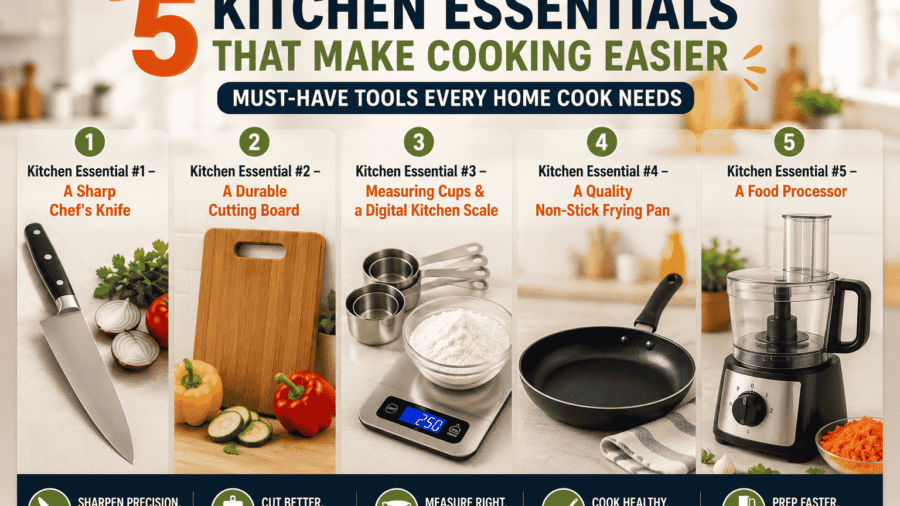
Kitchen Essential #1 – A Sharp Chef's Knife

If there is one kitchen tool worth spending money on, it is a high-quality chef’s knife. A sharp knife makes slicing vegetables, trimming meat, chopping herbs, and preparing fruit significantly easier and safer than using a dull blade. Contrary to popular belief, dull knives are actually more dangerous because they require greater force and are more likely to slip.
A good chef’s knife also reduces hand fatigue during meal preparation. Instead of tearing or crushing ingredients, a sharp chef’s knife slices through them with ease, producing smooth, even cuts that not only enhance presentation but also promote consistent cooking.

Kitchen Essential #2 – A Durable Cutting Board

A cutting board may seem simple, but it protects both your countertops and your knives. Wooden cutting boards are gentle on knife edges, while high-quality plastic boards are dishwasher-safe and ideal for handling raw meat.
Using a stable cutting board also improves kitchen safety by preventing slipping during food preparation. Many modern boards include non-slip feet and juice grooves that help keep your workspace clean.

Kitchen Essential #3 – Measuring Cups & a Digital Kitchen Scale

Many home cooks rely on guesswork when preparing meals, but even a small error in measuring ingredients can affect the final result. This is especially true for baking, where the balance of flour, sugar, liquids, and leavening agents determines the texture and taste of the finished product.

A set of measuring cups and spoons is essential for both dry and liquid ingredients, while a digital kitchen scale provides the highest level of accuracy. Whether you’re following a family recipe or trying a new dish from a cookbook, precise measurements help ensure consistent results every time.
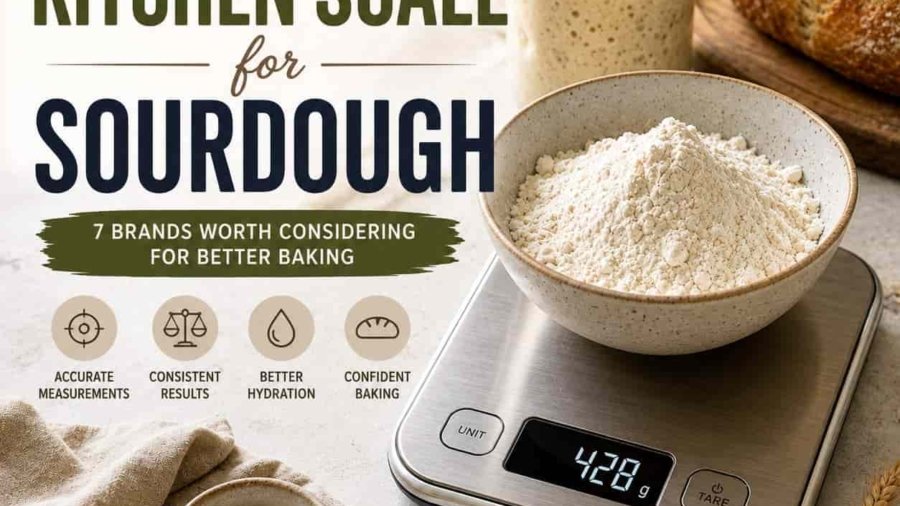
A digital kitchen scale is also incredibly useful for meal preparation and portion control. If you’re tracking calories, following a specific diet, or preparing meals in advance, weighing ingredients is far more accurate than using measuring cups alone. Many modern scales feature tare functions, allowing you to reset the weight after adding each ingredient to the same bowl, reducing cleanup and simplifying the cooking process.


Professional chefs often recommend weighing ingredients because it eliminates variations caused by packing or scooping. Flour, for example, can vary significantly in volume depending on how it’s measured, but 250 grams of flour is always 250 grams. This consistency leads to better breads, cakes, sauces, and even savory dishes.

Kitchen Essential #4 – A Quality Non-Stick Frying Pan

A dependable non-stick frying pan is one of the most frequently used pieces of cookware in any kitchen. From cooking eggs and pancakes to sautéing vegetables or searing chicken, a high-quality pan simplifies everyday cooking. Modern non-stick coatings require less oil, making meals healthier while also reducing the amount of food that sticks to the surface. This means easier cooking, easier flipping, and much easier cleanup afterward.
Choosing the right size is equally important. For most households, a 10-inch or 12-inch frying pan provides enough cooking space for daily meals without taking up excessive storage. Look for pans with thick aluminum or stainless steel construction, as they distribute heat more evenly and prevent hot spots that can burn food.
Durability should also be considered. Premium non-stick pans are designed to withstand frequent use while maintaining their coating when cared for properly. Using silicone, nylon, or wooden utensils instead of metal tools helps preserve the surface for years. Washing the pan by hand rather than in the dishwasher can also extend its lifespan.
A reliable frying pan saves time because food cooks evenly and releases easily from the surface. Whether you’re preparing breakfast before work or making a quick weeknight dinner, this simple tool can make cooking far less stressful.

Kitchen Essential #5 – A Food Processor

If you’ve ever spent half an hour chopping vegetables by hand, you’ll immediately appreciate the value of a food processor. This versatile appliance can slice, dice, shred, chop, puree, and even knead dough in a fraction of the time it takes to do these tasks manually.

A food processor can significantly reduce preparation time by quickly chopping, shredding, slicing, and blending ingredients. Whether you’re making fresh salsa, creamy hummus, homemade pie crust, pizza dough, or crunchy coleslaw, it delivers fast, uniform results with minimal effort.
One of the greatest advantages of a food processor is its versatility.

Many models include interchangeable blades and discs that allow you to perform multiple kitchen tasks with a single appliance. Instead of purchasing several specialized gadgets, one quality food processor can handle a wide variety of food preparation needs.

For busy families or anyone who enjoys batch cooking, this appliance is a true time-saver. Preparing vegetables for soups, casseroles, salads, or stir-fries becomes much faster, making home cooking more practical even on hectic weekdays. It’s also ideal for making homemade sauces, nut butters, breadcrumbs, and shredded cheese.

Although a food processor represents a larger investment than some other kitchen essentials, its ability to save time and reduce repetitive work makes it one of the most valuable appliances in a modern kitchen.

Tips for Choosing the Best Kitchen Essentials

When shopping for kitchen tools, prioritize quality over quantity. A few well-made essentials will often outperform a drawer full of inexpensive gadgets that wear out quickly. Consider the materials, ease of cleaning, warranty, and customer reviews before making a purchase.
It’s also wise to think about your cooking habits. If you enjoy baking, investing in an accurate kitchen scale may provide the greatest value. If you prepare fresh vegetables every day, a quality chef’s knife and food processor will likely have the biggest impact on your cooking experience.

Finally, remember that maintaining your tools is just as important as buying them. Sharpen knives regularly, avoid using abrasive cleaners on non-stick cookware, and follow the manufacturer’s care instructions to maximize the lifespan of your kitchen essentials.

Conclusion

Equipping your kitchen with the right tools doesn’t mean filling every cabinet with expensive gadgets. In reality, a handful of carefully chosen essentials can completely transform the way you cook. A sharp chef’s knife helps you prepare ingredients quickly and safely, while a durable cutting board protects both your workspace and your knife. 

Adding measuring cups and a digital kitchen scale ensures accuracy, especially when baking or following detailed recipes. A quality non-stick frying pan makes everyday cooking easier with less oil and effortless cleanup, and a food processor dramatically cuts down prep time by handling chopping, slicing, shredding, and pureeing in minutes.

These five kitchen essentials are practical investments that benefit beginners and experienced home cooks alike. They help reduce cooking time, improve consistency, and make the entire process more enjoyable. Rather than struggling with dull tools or outdated equipment, you’ll be able to focus on creating delicious meals with confidence. Whether you’re cooking for yourself, your family, or entertaining guests, these essentials provide the foundation for a more efficient and enjoyable kitchen.

If you’re ready to upgrade your cooking experience, start with one or two of these must-have tools and gradually build your collection. Purchasing quality products from trusted brands may cost a little more initially, but they often last for years and provide better performance, making them a worthwhile investment for any home kitchen.

Frequently Asked Questions (FAQs)

1. What is the most important kitchen essential for beginners?

A chef’s knife is widely considered the most important kitchen tool. It is used for nearly every meal preparation task, including chopping vegetables, slicing meat, mincing herbs, and cutting fruit. A sharp, well-balanced knife improves both safety and efficiency.

2. Is a food processor worth buying?

Yes. If you cook regularly, a food processor can save a significant amount of time by quickly chopping vegetables, shredding cheese, slicing fruits, making sauces, and preparing dough. It is especially useful for families and meal-prep enthusiasts.

3. Why should I use a digital kitchen scale instead of measuring cups?

A digital kitchen scale provides more accurate measurements than measuring cups, particularly for baking. Measuring by weight ensures consistency and helps achieve better results with recipes that require precision.

4. How long does a non-stick frying pan typically last?

With proper care, a high-quality non-stick frying pan can last between 3 and 5 years, or even longer. Using silicone or wooden utensils, avoiding high heat, and hand washing the pan can help extend its lifespan.

5. Where can I buy these kitchen essentials

These kitchen essentials are available from many retailers, but Amazon offers a wide selection of brands, competitive pricing, verified customer reviews, and convenient home delivery. Comparing ratings and reading customer feedback before purchasing can help you choose the best option for your needs.