

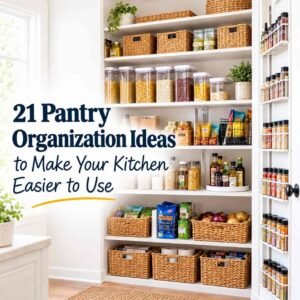
You open the pantry looking for pasta and somehow end up moving three cereal boxes, a bag of rice, a stack of cans, and something you don’t even remember buying. Five minutes later, you still haven’t found the pasta.
That is usually not a pantry-size problem. It is a visibility and access problem.
Good pantry organization ideas and practical kitchen pantry organization are not about making every shelf look like a showroom. They are about making it obvious where things belong, keeping frequently used foods within easy reach, and preventing the back of a shelf from becoming a hiding place for forgotten groceries.
Recent organizing advice also points toward decluttering before buying storage products and designing systems around actual use rather than appearance. (Good Housekeeping)
Whether you have a walk-in pantry, a tall cabinet, or three shelves squeezed beside the refrigerator, the same basic principle applies: everything needs a logical home, and you need to be able to see and reach that home.
Let’s look at practical ways to make that happen.
Table of Contents
Why Pantry Organization Matters

An organized pantry saves small amounts of time repeatedly, and those minutes add up. When breakfast foods are together, baking ingredients are easy to find, and canned goods are visible, you spend less time searching and more time actually preparing food.
Better organization can also help reduce duplicate purchases. If you can immediately see that you already have two packages of pasta or three cans of beans, you are less likely to buy another one simply because the original disappeared behind something else.
A useful pantry should make five things easier:
- Finding ingredients quickly
- Seeing what needs to be used
- Restocking groceries
- Cleaning shelves
- Planning meals and shopping
The goal isn’t maximum capacity at any cost. A pantry packed from front to back may technically hold more food, but if you cannot reach half of it, that extra capacity is not very useful.
How to Organize a Pantry Step by Step

The easiest way to organize a pantry is to start with the space itself rather than immediately buying containers, an important step in practical kitchen pantry organization. Empty the shelves, clean them, inspect the food you already own, and then build a system around your actual shopping and cooking habits.
1. Empty the Pantry Completely
Take everything out, even if the pantry looks only slightly messy. Working shelf by shelf often leaves hidden duplicates and forgotten items behind.
Once everything is visible, wipe the shelves and check for crumbs, spills, damaged packages, or signs of pests.
2. Check Dates and Condition
Separate expired food from food that should be used soon. Don’t automatically throw away every item simply because it has been sitting around; check the package and follow the manufacturer’s storage guidance.
Create a small use-first section for items that need attention soon.
3. Group Similar Foods
Start broad as part of your kitchen pantry organization. Put snacks together, baking supplies together, breakfast foods together, and canned goods together.
You can create smaller categories later if they genuinely make finding things easier.
4. Decide What Needs Containers
Not every food needs to be decanted.
Airtight containers make sense for frequently used dry staples such as flour, sugar, rice, oats, or pasta when they improve freshness, visibility, or stacking. Sealed packages, occasional ingredients, and foods that already have useful packaging can often stay as they are.
5. Create Pantry Zones
Think of each shelf as a small neighborhood.
A practical setup might include a breakfast zone, snack zone, cooking zone, baking zone, canned-food zone, and backstock zone.
6. Arrange by Frequency of Use
Put everyday foods where you can grab them easily. Reserve high or low shelves for less frequently used items.
This is one of the most effective pantry storage ideas because it organizes the pantry around behavior rather than appearance.
7. Use Vertical Space
If there is six inches of empty air above a row of cans, that space is being wasted.
Shelf risers, stackable bins, and adjustable shelving can create another usable level without increasing the pantry’s footprint.
8. Label Only Where It Helps
Labels are most useful when a container is opaque, a bin holds several related products, or multiple people use the pantry.
You do not need to label every single jar.
9. Create a Restocking System
When you bring home new groceries, place older items toward the front and newer ones behind them where practical.
This simple first-in, first-out habit can make pantry maintenance much easier.
10. Maintain the System
An organization system should be easy enough to maintain on a normal Tuesday evening. If returning one item to its proper location requires three steps, the system is probably too complicated.
21 Pantry Organization Ideas That Actually Work
Now for the practical part. The following pantry organization ideas focus on solving common problems rather than simply making shelves look attractive.
1. Create a Frequently Used Zone
Your everyday foods deserve the easiest-to-reach location.
Place commonly used breakfast items, snacks, coffee supplies, sauces, and cooking ingredients around eye or waist level. This keeps you from constantly reaching over less-used products.
2. Use Airtight Containers for Dry Staples
Airtight food-storage containers can turn messy bags into neat, stackable storage.
They are particularly useful for foods such as:
- Flour
- Sugar
- Rice
- Oats
- Pasta
- Cereal
- Dried beans
Look for containers with secure lids, easy-to-clean surfaces, and dimensions that suit your shelves.

- Help Organize Your Kitchen and Pantry: Imagine every time walking to your kitchen or pantry, found everything is neatly …
Who needs them? People who regularly buy dry staples or want more consistent stacking.
Who may skip them? If you buy small quantities and consume them quickly, original packaging may be perfectly adequate.
3. Put Snacks in Clear Bins
Snack packets tend to spread across pantry shelves because they come in different shapes and sizes.
A clear pantry bin gives them one defined location and allows you to pull an entire category forward at once.

- Make Your Life Much Easier —- You can use these pantry bins for various things throughout your home to organize and ma…
Before buying, check the bin’s width, depth, handle design, and whether you can comfortably pull it out while the shelf is loaded.
4. Add Shelf Risers for Cans
A shelf riser creates levels so cans in the back are easier to see.
This is especially useful if you regularly store canned vegetables, beans, soups, tomatoes, or other canned ingredients.

- CABINET SHELF RISER THAT DOUBLES YOUR CABINET SPACE: Slide it inside any cabinet, cupboard or pantry and gain a second l…
Check the riser’s height against your shelf clearance. You want enough room for the items above it without making them difficult to remove.
5. Use a Turntable for Bottles
A lazy Susan or pantry turntable can make awkward corners much easier to use.
Place sauces, oils, condiments, and jars on it so you can rotate the organizer instead of reaching behind several bottles.

- Package Include: 4 Pack 10 Inch lazy susan organizer. Easily rotating plastic lazy susan turntable for cabinet includes …
Measure the shelf before purchasing. Pay particular attention to diameter and height.
6. Create a Dedicated Baking Zone
Keep flour, sugar, baking powder, chocolate chips, extracts, decorating supplies, and similar ingredients together.
A shallow basket can be useful for smaller baking ingredients because you can move the whole group when you need it.
7. Separate Breakfast Foods
Give cereal, oatmeal, pancake ingredients, spreads, and breakfast snacks a defined area.
This makes mornings easier because the ingredients you need are close together rather than scattered across the pantry.
8. Create a Backstock Zone
Buying household staples in multiples can save grocery trips, but duplicate products can quickly overwhelm a pantry.
Create a separate backstock area for unopened extras.
Keep the everyday supply accessible and the extras somewhere visible but out of the prime storage area.
9. Use the Pantry Door
The inside of the pantry door is often unused.
An over-the-door organizer can hold spices, packets, snacks, or other lightweight items without taking up shelf space.
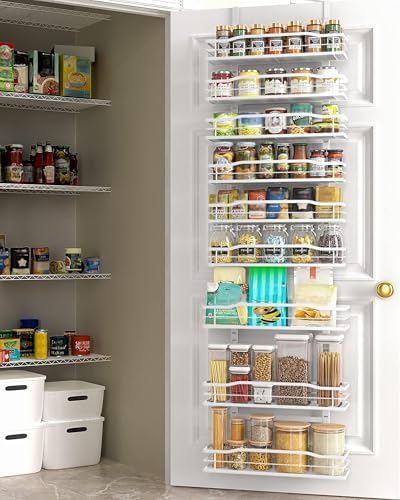
- Maximize Your Space: Our 9-Tier over the door pantry organizer is designed to make the most of your storage space, allow…
Check the door’s width and the clearance between the door and shelves before buying. The organizer should not prevent the pantry from closing.
10. Use Pull-Out Bins for Deep Shelves
Deep shelves are convenient until something disappears behind everything else.
A pull-out pantry organizer lets you bring the stored category toward you rather than reaching blindly into the back.
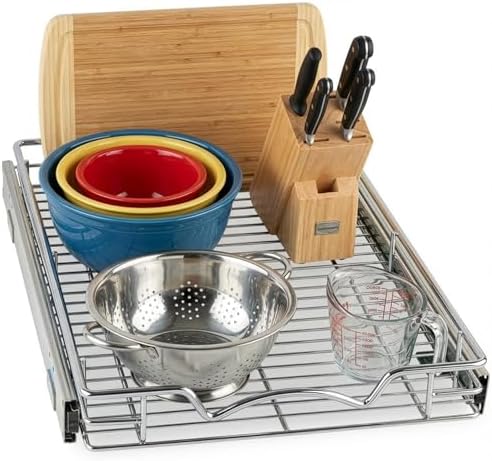
- A MUST HAVE PULL OUT DRAWER: This sliding cabinet organizer installs in under 30 minutes and makes it super easy to stor…
Look carefully at width, depth, mounting method, weight capacity, and the amount of clearance required.
11. Store Heavy Foods Low
Large bags of rice, bulk packages, canned goods, and beverages are generally easier to handle on lower shelves.
This also frees higher shelves for lightweight products.
12. Organize Spices Vertically
Spice jars are small, but they can consume surprising amounts of shelf space when stacked in several rows.
A tiered spice rack makes more labels visible at once.

- MAXIMIZE CABINET SPACE: This 3-tier spice rack organizer for cabinet transforms cluttered shelves into an orderly pantry…
Choose one based on the number of spice jars you actually own rather than buying the largest available model.
13. Add Under-Shelf Baskets
An under-shelf basket can turn unused space beneath a shelf into additional storage.
They can work for tea bags, flat packets, small snacks, wraps, or lightweight baking supplies.

- [No Assembly Required]: Fits most cabinets—requires a coin-thick gap for door to close tightly.No need to use any tools,…
Make sure the basket doesn’t interfere with the food stored underneath it.
14. Use Stackable Pantry Bins
Stackable bins are particularly helpful when your pantry shelves are tall.
They allow you to divide vertical space into smaller, more accessible sections.

- 10S QUICK INSTALLATION: This wire storage basket can be easily and quickly installed in 10s, no screws and no tools requ…
Choose stable designs that don’t require you to completely remove the upper bin every time you need something from below.
15. Give Cereal Its Own Storage
Large cereal boxes can take up considerable shelf space and leave awkward gaps.
Cereal storage containers can make the contents easier to see and may provide a more consistent shape for stacking.

- Shatterproof Visibility: Full 360-degree crystal-clear Tritan plastic body.
Check the container’s capacity and height before buying. It should fit comfortably beneath your shelf.
16. Create a Snack Station
If your household frequently reaches for snacks, create one clearly defined snack zone.
Use one or two baskets for crackers, bars, dried fruit, or individually packaged foods rather than allowing snacks to spread across the pantry.

- 【Make Storage Effortless & Visible】Made of premium BPA-free plastic, these crystal-clear pantry storage bins let you ins…
A low shelf can work particularly well if the intended users need easy access.
17. Store Potatoes and Onions Properly
Potatoes and onions shouldn’t automatically be treated like dry boxed goods.
If your pantry is suitable for storing them, use a ventilated storage container in an appropriate cool, dark location rather than a sealed airtight food container.

- Pantry Organizers Storage: The acrylic bins measurements 12″ long x 7″ wide x 7″ high. The overall height of our bin is …
Choose ventilation-focused storage and consider the amount you normally purchase.
18. Use Food Storage Baskets
Baskets are useful when you want to group foods without transferring them into containers.
Use one for baking packets, another for breakfast extras, or another for backstock.

- Plastic
- 5 packs : You will get 5 fridge storage containers with colander size from 300 ml to 4200 ml [10 oz – 148 oz ]. Suited f…
Look for sturdy handles and dimensions that make the basket easy to remove from your shelf.
19. Create a “Use First” Basket
This is one of the most useful pantry storage ideas because it turns forgotten food into visible food.
Put products that need to be used soon in one clearly identified area.
You don’t have to inspect every shelf constantly. The basket acts as a visual reminder.
20. Reserve the Top Shelf for Occasional Items
Don’t waste your easiest-to-reach space on foods you use once every few months.
The top shelf can hold specialty ingredients, seasonal foods, extra serving supplies, or unopened items that aren’t needed every day.
21. Leave Room for the Next Grocery Trip
A pantry should work when it is full, not just when it has been freshly organized.
When designing your system, leave enough space for your normal grocery purchases. If a shelf is already packed before you shop, the organization system is too restrictive.
Small Pantry Organization Ideas for Limited Space

Small pantry organization is less about squeezing in more products and more about making every accessible inch work efficiently. A narrow cabinet can hold a surprising amount when items are visible, categories are controlled, and vertical space is used intelligently.
Start by identifying your pantry’s wasted areas. Look at the space above cans, the back of shelves, the inside of the door, and awkward corners.
Then prioritize the solutions that address those specific gaps.
For example:
- Use stackable bins to create a second level.
- Use narrow organizers in unused side areas.
- Add a door rack for lightweight products.
- Use tiered shelves to make rear items visible.
- Keep categories compact rather than spreading one food type across multiple shelves.
- Store bulk extras somewhere else if they overwhelm the pantry.
Recent small-pantry guidance similarly emphasizes vertical storage, door space, clear containers, and compact zones rather than simply adding more furniture. (Home Organizing Ideas)
A useful rule is this: don’t organize empty space; organize the food you actually own.
How to Organize Deep Pantry Shelves

Deep shelves can provide plenty of storage but often create the biggest accessibility problem. When a shelf is deeper than your comfortable reach, the back becomes easy to forget.
The solution is to make depth movable.
Use pull-forward bins for categories that live toward the back. Instead of stacking several packages directly on the shelf, place related foods inside a container that can slide forward.
A turntable can work well in deep corners for bottles and jars. Tiered risers can help with cans because they improve visibility without requiring every item to sit in one long flat row.
You can also divide the shelf by depth:
Front: everyday foods
Middle: weekly-use ingredients
Back: unopened extras or infrequently used items
This approach turns depth into a deliberate storage system instead of a place where food disappears. Current pantry organization guidance increasingly recommends pull-forward storage and defined zones for exactly this reason.
How to Organize Pantry Food by Category

There is no single perfect category system. The best one reflects what your household actually eats.
A practical starting point could include:
| Pantry Zone | Typical Foods |
| Breakfast | Cereal, oats, pancake mix, spreads |
| Baking | Flour, sugar, baking powder, chocolate chips |
| Grains | Rice, quinoa, couscous |
| Pasta | Pasta, noodles, pasta-related ingredients |
| Canned Foods | Beans, vegetables, soups, tomatoes |
| Snacks | Crackers, bars, dried fruit |
| Spices | Herbs, spices, seasoning blends |
| Sauces | Pasta sauce, condiments, cooking sauces |
| Beverages | Tea, coffee, drink mixes |
| Backstock | Unopened duplicates and bulk purchases |
| Use First | Foods that should be used soon |
Don’t create twenty tiny categories if ten broad ones work better.
The right system should help you answer a question instantly: “Where would I look for this?”
Pantry Storage Solutions Worth Considering

Not every pantry needs every organizer. Product selection should follow the problem.
Clear Food-Storage Containers
Useful for dry staples when you want visibility, consistent stacking, or airtight storage.
Best for: flour, sugar, rice, oats, cereal, pasta, and frequently used dry foods.
Stackable Bins
These create layers and help contain loose packages.
Best for: snacks, packets, baking supplies, and small food packages.
Pantry Baskets
Baskets work well for grouping categories that contain many individual packages.
Best for: snacks, breakfast items, baking ingredients, or backstock.
Shelf Risers
These create height and improve visibility.
Best for: cans, jars, spices, and small containers.
Can Organizers
These keep cans contained and can make stock levels easier to see.
Best for: households that regularly keep many canned foods.
Turntables
These are particularly useful where shelves are deep or corners are awkward.
Best for: bottles, sauces, oils, condiments, and jars.
These make small jars easier to identify.
Best for: spice collections that currently form several layers on a shelf.
Pull-Out Bins
These are among the most useful pantry storage solutions for deep shelves because they turn inaccessible depth into something you can pull toward yourself.
Best for: backstock, baking supplies, snacks, and bulky packages.
Before buying anything, measure the available space. An organizer should improve access without making the shelf so crowded that you cannot remove anything comfortably.
Pantry Organization Mistakes to Avoid
One of the biggest mistakes is buying storage products before understanding the pantry. It is easy to spend money on containers that look perfect online but do not fit your shelf depth, food quantities, or daily habits.
Other common problems include:
- Putting every food into containers when the original packaging works perfectly well.
- Ignoring vertical space.
- Hiding frequently used ingredients on high shelves.
- Making categories so specific that nobody remembers them.
- Overcrowding shelves.
- Buying too many matching containers.
- Forgetting about the pantry door.
- Storing new groceries in front of older ones.
- Keeping bulk purchases inside a pantry that cannot comfortably handle them.
- Designing a system that takes too long to reset.
A particularly important mistake is confusing capacity with usability. A pantry stuffed from wall to wall may hold more food, but it can become harder to see what you have.
How to Keep Your Pantry Organized
A pantry doesn’t need a dramatic monthly makeover. Small maintenance habits are easier to sustain.
Once a week, take a few minutes to return misplaced items to their zones. While putting away groceries, move older products forward and place newer products behind them when appropriate.

Once a month, quickly scan for expired or forgotten foods. Wipe any spills immediately instead of waiting for the next major cleaning day.
During grocery shopping, check the pantry before buying duplicates. This is where good organization pays off: the pantry becomes a visual inventory rather than a storage mystery.
If a category repeatedly overflows, don’t simply buy a larger bin. Ask why it is overflowing. You may need a different category, less backstock, or a new location for that food.
A successful system should become boring—in the best possible way. You use it without thinking.
FAQ Section
What is the best way to organize a pantry?
The best approach is to group foods into practical zones, place frequently used items in accessible locations, improve visibility, and use containers only where they solve a real problem. Start by decluttering and measuring the pantry before buying organizers.
How do I organize a very small pantry?
Use vertical space, stackable organizers, narrow bins, shelf risers, and door storage. Keep categories broad and prioritize frequently used foods at eye level while moving bulk and rarely used items elsewhere.
How do I maximize pantry space?
Maximize usable space rather than simply adding more items. Use vertical gaps, stackable containers, shelf risers, pull-forward bins, and door storage while keeping enough clearance to remove items easily.
Should pantry food be stored in containers?
Not always. Containers are useful for dry foods when they improve freshness, visibility, stacking, or portion management. Many packaged foods can remain in their original packaging if that packaging is practical and easy to store.
How do I organize deep pantry shelves?
Use pull-forward bins, tiered risers, or turntables to bring items toward you. Keep everyday products toward the front and reserve the back for backstock or less frequently used foods.
What should I put on the bottom pantry shelf?
Use lower shelves for heavier or bulkier items such as large food packages, canned goods, beverages, or other products that are easier to lift from a low position.
How can I keep my pantry organized?
Give each category a consistent home, return products after use, rotate older food forward, and perform a quick weekly reset. Avoid creating a system with more maintenance than your household can realistically manage.
Are pantry organizers worth buying?
They can be, but only when they solve a specific problem. Pull-out bins can improve deep-shelf access, risers can improve can visibility, and turntables can make corners easier to reach. Measure first and buy based on function.
How should I organize canned foods?
Group similar cans together and use a tiered riser or can organizer if rear labels are difficult to see. Keep older cans toward the front when practical so they are used before newer purchases.
How often should I reorganize my pantry?
A full reorganization may only be necessary a few times a year or when your household’s needs change. A quick weekly reset and periodic expiration check are usually more useful than repeatedly starting from scratch.



Add a Comment