


A laundry and cleaning closet can quickly become one of the hardest-working and most cluttered storage areas in a home. Detergent bottles, stain removers, sprays, microfiber cloths, brushes, paper products, brooms, mops, and miscellaneous supplies often end up sharing the same shelves with no clear system.
Effective laundry and cleaning closet organization starts by giving every category a practical home. Instead of adding organizers everywhere, we can first identify what needs to be stored, how frequently it is used, and which storage method makes it easiest to access.
Affiliate disclosure: The links in this article may be affiliate links. If you purchase through one of these links, we may earn a commission at no additional cost to you.
The goal is simple: create separate zones, use overlooked vertical and door space, make deep shelves accessible, and keep everyday laundry and cleaning supplies within easy reach.
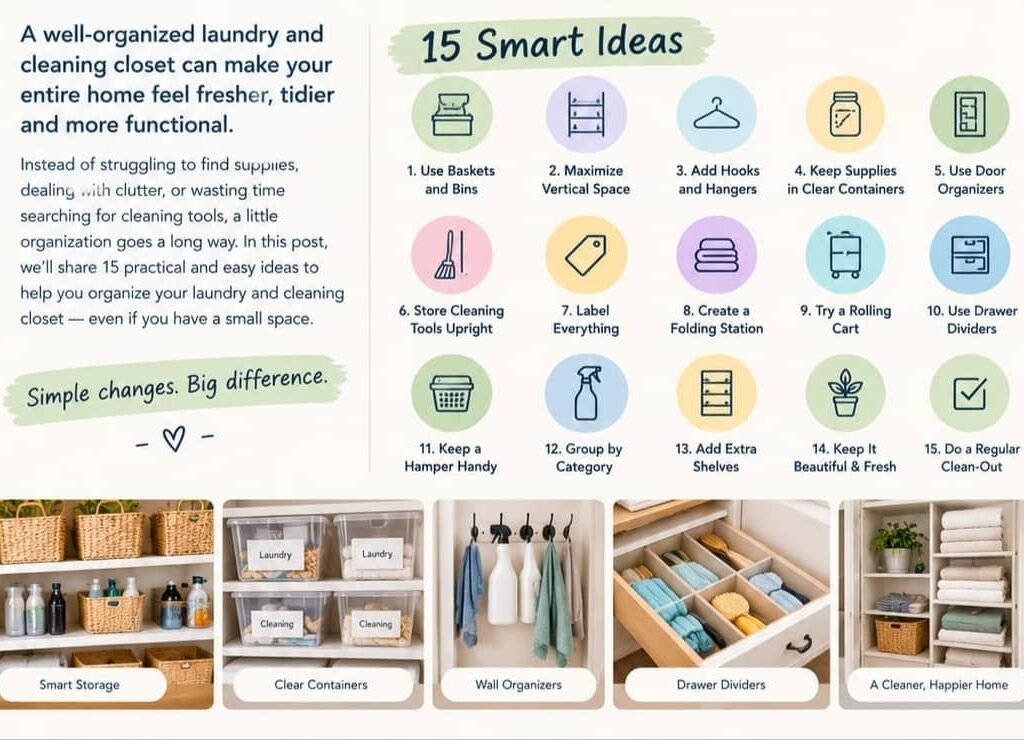
Table of Contents
1. Declutter Before Starting Laundry and Cleaning Closet Organization
The Problem
Adding storage products to an already overcrowded closet usually makes the problem worse. Expired products, empty containers, duplicate tools, and items that belong elsewhere consume valuable shelf space.
The Solution
Remove everything from the closet and sort it into four groups:
- Laundry supplies
- Cleaning products
- Cleaning tools
- Items that belong somewhere else
Check partially used products before deciding where they belong. Consolidate compatible supplies only when the original labeling and safe storage requirements can still be maintained. Dispose of unwanted products according to local disposal guidance rather than simply placing them back in the closet.
Useful Product
A few clear storage bins can help group small categories after decluttering.

- Large 92Qt Stackable Storage Bins:Each tier measures 15.35″ x 11″ x 8.27″, total 92Qt capacity. Ideal for organizing toy…
What to Look For
Choose bins that fit the existing shelves and have handles if they will be pulled forward frequently.
How to Use It
Do not organize first and declutter later. Measure the space after removing unnecessary items so future purchases are based on the storage capacity you actually have.
2. Create Separate Laundry and Cleaning Zones
The Problem
Laundry detergent and household cleaning products tend to become mixed together, making it difficult to find supplies quickly.
The Solution
Divide the closet into clear functional zones. One area can hold detergent, stain removers, laundry bags, and related laundry supplies. Another can contain sprays, cloths, brushes, and cleaning tools.
This simple approach is the foundation of effective cleaning closet organization because products are stored according to their purpose rather than simply according to available space.
Useful Product
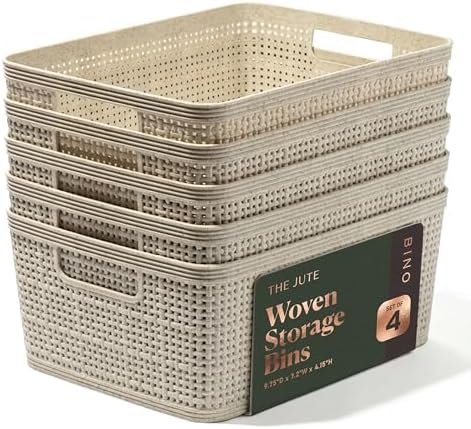
Consider stackable storage bins, shelf organizers, or baskets for category separation.


What to Look For
Look for products that use the full shelf width without making individual categories difficult to remove.
How to Use It
Keep the most frequently used laundry supplies at hand level and reserve higher shelves for backup or occasional items.
3. Use Vertical Storage Instead of Widening the Closet
The Problem
Many closets have unused space above the existing shelf arrangement.
The Solution
Make the height of the closet work harder. Vertical storage can add another usable level without increasing the closet’s footprint.
Useful Product
An adjustable shelf riser or compact stackable shelf organizer can create a second storage level.

- CABINET SHELF RISER THAT DOUBLES YOUR CABINET SPACE: Slide it inside any cabinet, cupboard or pantry and gain a second l…
What to Look For
Prioritize adjustable designs, stable construction, appropriate weight capacity, and dimensions that leave enough clearance for the products underneath.
How to Use It
Place lightweight, frequently accessed items on added upper levels while keeping heavier detergent bottles lower.
4. Make Deep Shelves Easier to Reach
The Problem
Deep shelves often create a hidden second row of products. Items at the back disappear from view and eventually become forgotten.
The Solution
Use pull-out storage or open-front containers so the entire contents can be accessed without unloading the shelf.
Useful Product
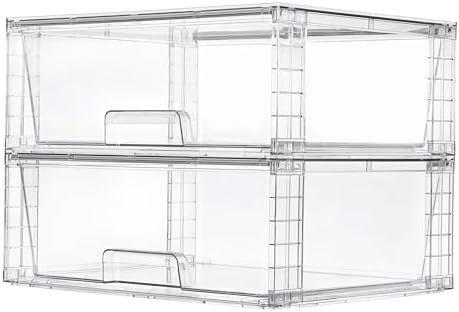
Try pull-out storage bins, handled baskets, or sliding shelf organizers.

What to Look For
Choose containers with sturdy handles and a footprint that matches the shelf depth.
How to Use It
Group related supplies together. For example, stain removers and laundry accessories can share one pull-out container rather than being scattered across several shelves.
This is particularly useful for small laundry closet organization, where every shelf needs to provide usable—not merely theoretical—storage.
5. Organize Heavy Detergent Bottles at a Safe, Convenient Height
The Problem
Large detergent containers consume substantial shelf space and can be awkward to lift from high shelves.
The Solution
Create a dedicated detergent storage area toward the lower or middle portion of the closet. Keep heavy products stable and accessible rather than placing them where lifting is difficult.
Useful Product
A detergent storage container, sturdy tray, or low-profile shelf organizer can define the area.

- Ideal Laundry Room Storage Solution: The transparent design and included labels allow for easy organization and quick ac…
What to Look For
Consider load capacity, leak-resistant construction, easy cleaning, and sufficient clearance for the bottles you actually use.
How to Use It
Keep primary detergent within easy reach and store unopened backups separately so everyday products do not compete with reserve stock.
6. Build a Portable Cleaning Supply Caddy
The Problem
Frequently used sprays, cloths, brushes, and other cleaning products often have to be carried individually from room to room.
The Solution
Create a portable cleaning station.
Useful Product
A cleaning caddy with compartments provides one designated place for frequently used cleaning products.

- Large 17L Capacity & Perfect Size:This cleaning caddy offers a spacious 17L capacity and measures 28 × 28 cm / 11 × 11 i…
What to Look For
Look for a comfortable handle, stable base, washable material, and compartments large enough for bottles and small tools.
How to Use It
Choose only the products used regularly. A caddy should reduce trips around the house, not become another oversized storage container.
This approach is especially useful for cleaning supply closet organization because the main closet can hold backups while the caddy handles everyday cleaning.
7. Turn the Closet Door Into Storage
The Problem
The inside of a closet door is often completely unused.
The Solution
Add door-mounted storage for lightweight supplies and small accessories.
Useful Product
An over-the-door cleaning organizer can hold cloths, brushes, small bottles, gloves, or other compatible items.

- [Wall Mount & Over Door]This over the door organizer can be installed on the wall or hung on the door. Pre-drilled holes…
What to Look For
Measure the door first. Check door clearance, mounting method, pocket depth, and whether the organizer interferes with shelves when the door closes.
How to Use It
Use the door for relatively lightweight items rather than heavy detergent bottles. Arrange pockets by frequency of use so the supplies used most often are easy to grab.
8. Stop Spray Bottles From Falling Over
The Problem
Tall spray bottles can tip over when shelves are crowded. Their irregular shapes also leave awkward gaps between containers.
The Solution
Give spray bottles their own upright section.
Useful Product
A spray bottle organizer or divided storage bin can keep bottles standing in individual sections.

- Material: Made of sturdy steel, strong and wear-resistant, could last for a long time
What to Look For
Choose compartments wide enough for your bottles, a stable base, and material that is easy to wipe clean.
How to Use It
Group similar spray products together and keep the organizer toward the front of the shelf if those products are used frequently.
9. Give Microfiber Cloths and Small Tools Their Own Container
The Problem
Microfiber cloths, sponges, scrub brushes, and small cleaning accessories easily become one mixed pile.
The Solution
Separate soft cleaning cloths from hard tools.
Useful Product
Use a small basket, divided container, or open storage bin for microfiber cloth storage.


What to Look For
Choose breathable or washable storage where appropriate, especially if cloths are stored before they are fully dry. The container should also be small enough that cloths do not become compressed into an inaccessible pile.
How to Use It
Fold clean cloths consistently and separate them from used or damp materials. Small brushes can be stored in a separate compartment.
10. Get Brooms and Mops Off the Floor
The Problem
Long cleaning tools occupy valuable floor space and frequently fall over when they are simply leaned against a wall.
The Solution
Use the vertical wall area for long-handled tools.
Useful Product
A wall-mounted broom and mop holder or individual utility hooks can keep brooms, mops, dusters, and similar tools upright.

- Multi-purpose Wall Mounted Storage Rack – Our Reliahom adjustable wall mounted rack is designed for holding mops, brooms…
What to Look For
Check mounting requirements, tool-handle compatibility, weight capacity, and available wall clearance.
How to Use It
Position the holder where the tools can be removed without moving other supplies. Keep the floor underneath clear so the closet remains easy to access.
11. Add a Slim Rolling Cart When Floor Space Is Narrow
The Problem
A standard shelving unit may be too wide for a narrow gap.
The Solution
Use otherwise wasted floor space with a slim 3-tier rolling cart.

- MAKE THE MOST OF YOUR SPACE: This slim rolling cart is a great way to organize small spaces. Make clever use of the gap …
What to Look For
Measure the gap at its narrowest point. Consider cart width, height, wheel clearance, shelf spacing, and whether the cart can be pulled out without blocking the door.
How to Use It
A rolling cart works particularly well for frequently used cleaning supplies. Each tier can have a purpose—for example, sprays on one level, cloths and brushes on another, and refill supplies on the lowest level.
12. Turn Awkward Corners Into Functional Storage
The Problem
Corners often become dead zones because standard containers are too wide or difficult to reach.
The Solution
Use narrow storage designed around the actual shape of the closet.
Useful Product
Consider a narrow shelving unit, slim basket, corner-friendly organizer, or compact rolling cart.

- ROLLING STORAGE CART: The 6 tier slim rolling cart is 6″ deep design which can be used in tight spaces in your home for …
What to Look For
Measure both width and depth. Also check how much clearance is needed to remove products from the shelves.
How to Use It
Reserve awkward corners for less frequently used items. Everyday supplies should not be forced into a corner simply because there is space there.
13. Keep Unsuitable and Hazardous Products Separate
The Problem
A crowded cleaning closet can make it difficult to distinguish everyday household items from products that require more careful storage.
The Solution
Follow the storage directions on each product label and keep incompatible or hazardous products separated as directed. Keep cleaning products away from food, medications, and personal-care products, and use child-resistant or secured storage where appropriate.
Useful Product
A secure storage container or dedicated restricted-access cabinet area may be appropriate depending on the product and the home’s needs.

- LONG LASTING: Built to last, these strong plastic storage boxes with lids are made from impact resistant polypropylene t…
What to Look For
Prioritize secure closure, stability, appropriate ventilation where required by the product instructions, and easy identification.
How to Use It
Do not transfer products into unmarked containers simply for appearance. Original labels provide important information for proper use and storage.
14. Create an Everyday Cleaning and Laundry Zone
The Problem
A beautifully organized closet can still feel inconvenient if the products used every day are buried behind backups.
The Solution
Build a high-access zone around actual usage frequency.
Useful Product
Use a small open basket, shelf organizer, or handled caddy for daily essentials.
What to Look For
Prioritize easy access over maximum capacity. An organizer that holds fewer products but allows them to be removed quickly can be more useful than a large deep bin.
How to Use It
Place everyday detergent, stain treatment, frequently used cloths, and common cleaning tools at hand level. Store seasonal, backup, or rarely used products elsewhere.
This is one of the most practical laundry storage ideas because it focuses on reducing unnecessary searching rather than simply adding storage capacity.
15. Create a Maintenance System That Prevents the Closet From Relapsing
The Problem
Without a simple maintenance routine, even good laundry and cleaning closet organization eventually breaks down.
The Solution
Assign every category a permanent location and establish a quick reset routine.
Useful Product
Use only the organizers that genuinely support the system: baskets, shelf organizers, caddies, hooks, and containers where needed.
What to Look For
Choose products that are easy to access and return items to. If an organizer requires several steps to put something away, it may not suit a frequently used item.
How to Use It
After restocking, return products to their designated zones. Periodically check for duplicates, empty containers, expired items, and supplies that have migrated into the wrong category.
A maintenance system turns organization from a one-time project into a practical household routine.
Best Products for Laundry and Cleaning Closet Organization
The best organizational product depends on the problem rather than the number of shelves available.
| Storage Problem | Useful Product Category | Best Place to Use It | When It May Not Be Needed |
| Unused vertical space | Adjustable shelf riser | Existing shelves | When shelves are already tightly spaced |
| Very narrow floor area | Slim rolling cart | Gaps beside shelving | When the cart blocks the door |
| Mixed cleaning supplies | Cleaning caddy | Main cleaning zone | When supplies rarely leave the closet |
| Deep shelves | Pull-out bin | Lower/deep shelves | When shelves are shallow |
| Tall detergent bottles | Low storage tray | Lower shelf | When bottles are already easy to access |
| Door clutter | Over-door organizer | Closet door | When door clearance is limited |
| Brooms and mops | Wall-mounted holder | Side or rear wall | When mounting is not suitable |
| Small accessories | Divided organizer | Shelf or door | When there are only a few small items |
| Spray bottles | Bottle organizer | Cleaning shelf | When products are stored in a separate cabinet |
| Backup supplies | Stackable bins | Upper shelves | When there is insufficient vertical clearance |
The key is to buy organizers after measuring the closet, not before. A product can be useful in one closet and completely impractical in another.
Small Laundry and Cleaning Closet Organization
Limited space requires prioritization rather than simply adding more storage products.
For small laundry closet organization, start with the supplies used most frequently. These deserve the easiest-to-reach locations. Backup detergent, seasonal cleaning products, and rarely used accessories can move to higher shelves or another suitable storage location.
Vertical storage is particularly valuable in a compact closet. Shelf risers can create additional levels, while wall-mounted holders can move long cleaning tools away from the floor.
Door storage is another useful option. An appropriately sized organizer can turn the back of the door into a storage zone without consuming shelf space.
A slim rolling cart can also work when a closet contains a narrow unused gap. Unlike fixed shelving, it can be pulled forward when needed, provided there is enough clearance.
For small laundry closet organization, avoid oversized bins. A large container may technically hold more items while making every item harder to find.
When the closet cannot safely accommodate bulky equipment such as a broom or mop, storing those items in another appropriate location can actually improve the system. The goal is functional storage, not forcing every household item into one closet.
Common Laundry Closet Organization Mistakes to Avoid
Buying Organizers Before Measuring
Measure shelf width, depth, height, door clearance, and awkward gaps first. A few minutes of measuring can prevent purchases that do not fit.
Using Oversized Bins
Large bins can create inaccessible layers of products. Use smaller containers for categories that need frequent access.
Ignoring Vertical Space
If a closet has significant empty space above products, the storage layout is probably underusing its height.
Putting Heavy Products Too High
Heavy detergent bottles and large containers should not automatically be placed on the highest shelf simply because that shelf is available.
Buying Too Many Organizers
Organization products should solve specific problems. If a shelf already works well, it may not need another container.
Mixing Laundry and Cleaning Supplies
Separate zones make it easier to find products and prevent the closet from becoming a single mixed category.
Making Everyday Items Harder to Reach
A storage system should improve access. If daily detergent is buried inside a deep container behind several other products, the organizer has created friction rather than solved it.
What Should Go in a Laundry and Cleaning Closet?
A practical closet can contain:
- Laundry detergent
- Stain removers
- Laundry bags
- Fabric-care products where applicable
- Cleaning sprays
- Microfiber cloths
- Scrub brushes
- Sponges
- Cleaning caddies
- Dusters
- Brooms
- Mops
- Dustpans
- Cleaning accessories
- Paper products when appropriate
- Household cleaning refills
The exact contents depend on the home. Products that are used rarely or require different storage conditions do not necessarily need to occupy prime closet space.
FAQ: Laundry and Cleaning Closet Organization
How do we organize a laundry and cleaning closet?
Start by decluttering, then divide the closet into laundry and cleaning zones. Store everyday products at accessible levels, use vertical and door storage where suitable, and keep long tools mounted or contained rather than leaning on the floor.
How do we organize a small laundry closet?
For small laundry closet organization, prioritize vertical storage, door organizers, shelf risers, narrow carts, and compact containers. Keep only frequently used products in the easiest-to-reach areas.
What is the best way to organize cleaning supplies?
Group cleaning supplies by task or frequency of use. A cleaning caddy works well for products used throughout the home, while the closet can hold backup supplies and less frequently used tools.
How do we maximize laundry closet storage?
Use the closet’s height, door, shelf depth, and narrow gaps. Shelf risers, pull-out bins, hooks, and slim carts can increase usable storage without requiring a larger closet.
What should go in a cleaning closet?
A cleaning closet can hold cleaning products, cloths, brushes, dusters, mops, brooms, dustpans, caddies, and suitable household cleaning accessories. Store products according to their labels and keep unsuitable items elsewhere.
How do we organize cleaning supplies in a small space?
Use compact categories rather than one large mixed bin. Combine door storage, vertical shelf space, narrow carts, and small divided containers where appropriate.
What products are useful for laundry closet organization?
Useful options include shelf risers, pull-out bins, storage baskets, detergent storage solutions, hooks, over-door organizers, and narrow rolling carts. The right choice depends on the closet dimensions and storage problem.
How do we store brooms and mops in a cleaning closet?
A wall-mounted broom and mop holder can keep long tools upright and off the floor. Before installing one, check the wall surface, mounting requirements, handle compatibility, and available clearance.
How do we organize a narrow laundry closet?
Use the narrowest available gaps for a slim rolling cart or narrow shelving. Keep products that need frequent access near the front and avoid deep containers that make retrieval difficult.
How do we keep a cleaning closet organized?
Give every category a permanent location and return products after use. Periodically remove empty, unwanted, or misplaced items and adjust the storage layout when household needs change.
Final Thoughts on Laundry and Cleaning Closet Organization
Successful laundry and cleaning closet organization is less about filling every available inch and more about making the space work according to how the household actually uses it.
Start with decluttering. Separate laundry supplies from cleaning products, then assign each category an accessible zone. Use vertical storage where shelves leave unused height, door organizers where clearance allows, and narrow rolling carts where a traditional shelf would be too wide.
For cleaning closet organization, keep portable everyday supplies together in a practical caddy while storing backup products in clearly defined areas. For laundry storage ideas, give detergent, stain treatments, and accessories locations that make frequent tasks quick and uncomplicated. The strongest system is one that remains easy to use after the initial organizing session. When every item has a sensible location and the storage products match the closet’s actual dimensions, even a small space can become significantly easier to manage.
Best Laundry Hamper: Smart Picks for Every Home and Laundry Space
Home Laundry Essentials: The Complete Checklist for an Easy Laundry Setup
Best Portable Carpet Cleaner for Pets: 10 Top Picks for Pet Stains




Add a Comment